Solar & Geothermal vs. National Grid & Natural Gas: The Smart Move for Energy Independence
By Trey McDermid · · 3 min read
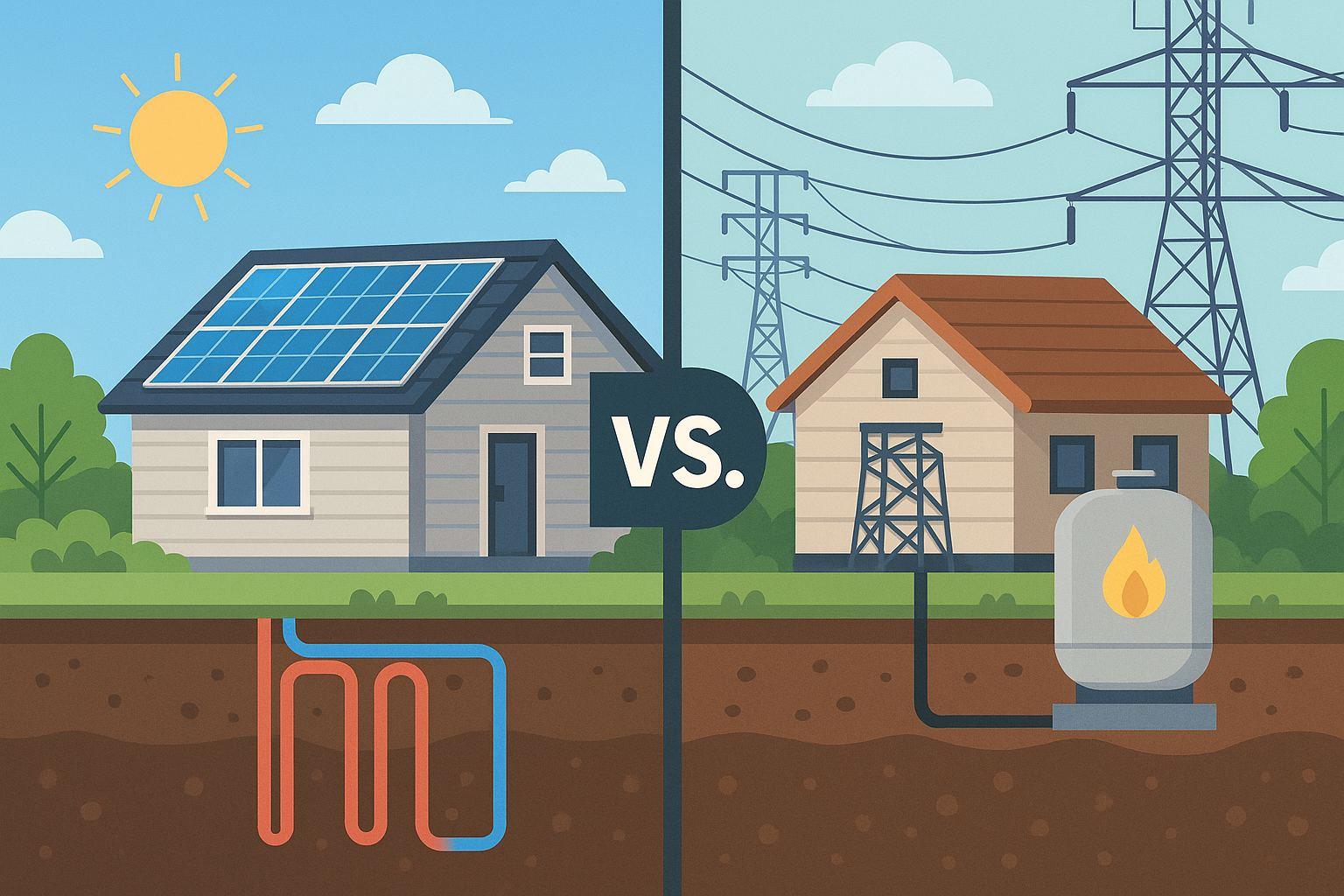
Homeowners today are rethinking how they power and heat their homes. Between rising utility costs, grid instability, and environmental concerns, many are asking: Is it time to switch to renewable energy home systems?
This article breaks down the real differences between solar and geothermal systems and traditional National Grid electricity and natural gas, helping you make an informed decision about energy, comfort, and cost.
Understanding the Basics
Solar Energy captures sunlight using photovoltaic (PV) panels to generate electricity. It can offset your grid usage or even eliminate your electric bill when designed correctly.
Geothermal Energy taps into the stable temperature beneath the earth's surface to heat and cool your home using an underground loop system.
National Grid & Natural Gas rely on fossil fuels, finite resources that fluctuate in cost and have high carbon emissions.
While both solar and geothermal systems require upfront investment, their long-term savings and independence from utility rate hikes can be substantial.
Cost Comparison: Upfront vs. Long-Term
Solar (Residential): Average upfront cost $15,000–$25,000, monthly energy savings 50–100% off electric bill, typical payback period 6–10 years
Geothermal: Average upfront cost $20,000–$40,000, monthly energy savings 40–70% off heating/cooling, typical payback period 8–12 years
National Grid & Natural Gas: Minimal upfront cost, no savings, continuous rising costs
While fossil fuel systems cost less upfront, they have no return on investment. Solar and geothermal systems, however, generate savings every month and increase property value.
In fact, homes with solar installations sell for an average of 4% more than comparable properties without solar, according to the U.S. Department of Energy.
Environmental Impact
Solar & Geothermal Systems:
- Zero direct emissions
- Reduce reliance on fossil fuels
- Eligible for federal and state tax credits
National Grid & Natural Gas:
- High greenhouse gas output
- Dependent on utility infrastructure and fuel transport
- Subject to volatile pricing
Every kilowatt-hour generated from renewable sources cuts down on carbon emissions, directly contributing to cleaner air and a healthier planet.
Comfort & Reliability
Solar Power pairs well with battery storage, allowing homes to stay powered during outages or grid failures.
Geothermal Systems offer superior comfort, stable indoor temperatures, quiet operation, and efficient heating/cooling regardless of outdoor conditions.
Grid & Gas Systems are susceptible to seasonal spikes and supply disruptions, which can lead to inconsistent performance and high winter bills.
Financial Incentives & Rebates
Federal programs like the Investment Tax Credit (ITC) can cover up to 30% of the installation cost for solar and geothermal systems. Many states, including New York, offer additional rebates through the NYSERDA Clean Energy Program.
When combined with local incentives and energy-efficient mortgage options, switching to renewables becomes far more affordable than most homeowners expect.
The Bottom Line
When comparing solar and geothermal systems to National Grid and natural gas, the difference comes down to control, sustainability, and long-term value.
Renewable systems protect you from energy inflation, stabilize monthly costs, and improve your home's environmental footprint. While the upfront investment may seem daunting, the combination of savings, tax credits, and resale value make the switch one of the smartest financial decisions homeowners can make.
Call to Action
Thinking about upgrading your home's energy system? Trey and his team can help you assess your property, evaluate renewable energy options, and connect you with trusted installers.
Contact us today to find out how much you could save with a solar or geothermal system, and take the first step toward true energy independence.